Advair Diskus (Salmeterol + Fluticasone) — Patient Information (Australia)
Advair Diskus is a combination inhaler used to help control long-term airway problems such as asthma and chronic obstructive pulmonary disease (COPD). It contains two medicines in one device:
- Salmeterol (a long-acting bronchodilator, LABA)
- Fluticasone (an inhaled corticosteroid, ICS)
This page explains how Advair Diskus works, how it is typically used, key safety points, and what to consider with other medicines and alcohol. It is written for patients and is intended to be easy to read.
Quick overview
| Feature | What it means for you |
|---|---|
| Brand / Product | Advair Diskus (Salmeterol + Fluticasone) |
| Medicine type | Inhaled combination therapy (LABA + ICS) |
| What it helps with | Long-term control of airway inflammation and symptoms |
| How it works | Fluticasone reduces inflammation; salmeterol relaxes airway muscles |
| How often | Typically twice daily (morning and evening) |
| When it starts working | Bronchodilator effect can be faster; full anti-inflammatory benefit takes days |
| Common device-related issue | Incorrect inhaler technique reduces medicine delivery |
Basic product information
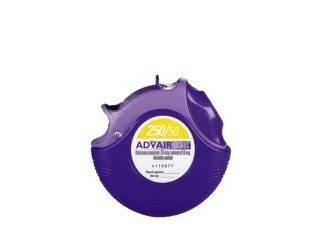
Advair Diskus is an inhaled medicine designed for use with the Diskus device. The Diskus has preloaded doses and is inhaled through the mouth to deliver the medicine deep into the airways.
- Active ingredients: salmeterol (LABA) and fluticasone (ICS)
- Drug class: inhaled corticosteroid + long-acting beta-2 agonist
- Typical strengths: available as different combinations of fluticasone and salmeterol (your pharmacist or prescriber can confirm the exact strength)
Important: Different countries and products may have different strengths. Always follow the specific instructions provided for your Advair Diskus strength and your treatment plan.
Mechanism of action (how Advair Diskus works)
Fluticasone (inhaled corticosteroid — ICS)
Fluticasone helps reduce inflammation in the airways. In asthma and many COPD patients, ongoing inflammation leads to swelling, mucus production, and increased airway sensitivity.
- Decreases inflammatory cell activity
- Reduces mucus and airway hyper-responsiveness
- Helps lower the risk of flare-ups (exacerbations)
Salmeterol (long-acting beta-2 agonist — LABA)
Salmeterol helps to relax the smooth muscle around the airways, improving airflow.
- Provides long-lasting bronchodilation (keeps airways more open)
- Improves symptoms such as wheeze, breathlessness, and chest tightness
Why the combination matters
The ICS component treats inflammation, while the LABA component treats bronchoconstriction. Together they can improve long-term symptom control and reduce exacerbations for suitable patients.
Pharmacokinetics (what the body does with the medicines)
Exact measurements can vary between individuals, but the following describes the general processes for inhaled fluticasone and salmeterol.
Inhalation and absorption
- Inhaled fluticasone: A portion reaches the lungs; some may deposit in the mouth/throat and be swallowed. Absorption from the gut can be limited due to extensive metabolism.
- Inhaled salmeterol: Like other inhaled LABAs, most of the effect comes from local action in the airways; some swallowed portion may contribute to overall exposure.
Distribution
- Both medicines can bind to proteins in the blood and are distributed throughout the body.
Metabolism
- Fluticasone and salmeterol are mainly metabolised in the liver, largely via the enzyme system involving CYP3A4.
- This is why certain medicines (e.g., some antifungals and antivirals) can interact and increase levels of either component.
Elimination
- Metabolites are removed mainly via the liver and bile, with smaller amounts eliminated via urine.
- Because it is inhaled and partly metabolised, systemic (whole-body) exposure is usually lower than with many tablets, but still clinically important.
Typical use and timing
What Advair Diskus is used for
- Asthma: to improve control and help reduce exacerbations in people who require maintenance inhaled therapy using an ICS and LABA combination.
- COPD: as maintenance treatment for airflow limitation associated with COPD, typically in patients whose symptoms and exacerbations are not adequately controlled by ICS or bronchodilator therapy alone.
How and when to take it
Advair Diskus is usually taken twice daily, approximately 12 hours apart (e.g., morning and evening). Consistency is key for best control.
- Morning dose: take at a time you can remember daily
- Evening dose: take at a similar time each day
Typical “control” effect vs “rescue” effect
Advair Diskus is intended for long-term control. It is not a quick-relief medicine for sudden symptoms.
- Use your prescribed reliever for sudden breathlessness/wheeze (for many patients this is a short-acting bronchodilator).
- If you need your reliever more often, symptoms are worsening, or your reliever is not working as expected, you may need a review.
Can you take Advair Diskus with food?
In most cases, food does not significantly affect the inhaled components of Advair Diskus because the medicine is delivered into the lungs. Therefore, it is generally acceptable to take Advair Diskus with or without food.
Practical tip: If you get throat irritation or hoarseness, rinsing your mouth and gargling after each dose can help reduce side effects (particularly with the corticosteroid component).
Alcohol interactions
Moderate alcohol intake is not typically known to directly interact with Advair Diskus in a clinically meaningful way. However, alcohol can worsen symptoms in some people by affecting breathing comfort, sleep, and overall airway health.
- If alcohol triggers your asthma/COPD symptoms (e.g., via reflux or airway sensitivity), consider reducing or avoiding it.
- Be cautious about drinking if you have frequent night symptoms or use other medicines that can cause dizziness or sedation.
Medicine interactions (including common important ones)
Because the active ingredients are partly processed by liver enzymes and can be affected by other medicines, certain interactions can change blood levels and side effects.
Medicines that may increase corticosteroid or LABA levels
- Strong CYP3A4 inhibitors (e.g., some antifungal medicines and some antivirals) may increase fluticasone and/or salmeterol exposure.
- This can raise the risk of corticosteroid-related effects and LABA-related side effects.
Medicines that can affect heart rhythm or potassium
- Other beta-agonists (especially if used frequently) can increase heart-related effects.
- Diuretics (water tablets) may lower potassium; low potassium can increase risk of rhythm problems in susceptible patients.
- Some medicines affecting heart rhythm may increase overall cardiac risk when combined with LABA effects.
Non-selective beta-blockers
- Non-selective beta-blockers may reduce the effect of salmeterol and can worsen airway narrowing in asthma.
- If you need a beta-blocker for another condition, tell your doctor—many people can use specific alternatives, but this should be individualised.
Practical advice
- Tell your pharmacist about all medicines you take, including allergy medicines, cold/flu products, eye drops, creams, and herbal supplements.
- If you start a new medicine, ask whether it could interact with Advair Diskus.
Dosing (general information)
Your exact dose depends on the condition (asthma vs COPD), disease severity, previous inhaler use, and your response. Always follow the dose prescribed for your specific Advair Diskus strength.
Typical adult dosing patterns
- Asthma: commonly taken twice daily at a dose tailored to control needs.
- COPD: commonly taken twice daily with a strength chosen based on symptom control and exacerbation history.
Do not change the dose or number of inhalations without medical advice.
How many puffs per dose?
The Diskus delivers a specific number of inhalations per dose depending on your prescribed strength and instructions. Use the device as directed and do not exceed recommended dosing.
Practical use tips (getting the best results from your Diskus)
Use the device correctly
Incorrect technique is a common reason inhalers don’t work as well as expected. If you’re unsure at any time, ask your pharmacist to watch and correct your technique.
- Open the Diskus until the mouthpiece appears and you hear it click.
- Load the dose (often by sliding a lever until it clicks, depending on the Diskus design).
- Breathe out fully away from the device (this helps air move the medicine into the lungs).
- Inhale forcefully and deeply through the mouthpiece.
- Hold your breath for a few seconds if comfortable, then breathe out slowly.
- Close and store the Diskus properly.
Rinse after inhaling
Because Advair Diskus contains an inhaled corticosteroid, you may get thrush (a fungal infection), hoarseness, or throat irritation. Rinsing can reduce these risks.
- Rinse your mouth with water after each dose.
- Gargle and spit out (do not swallow the rinse).
When to expect improvement
- Some people notice improved breathing within hours (mainly from salmeterol).
- More stable symptom control typically develops over several days as inflammation settles.
Safety profile and side effects
Advair Diskus is generally well tolerated when used correctly. Side effects may relate to the inhaled corticosteroid, the LABA, or the underlying condition.
Common side effects
- Hoarseness or voice changes
- Throat irritation
- Oral thrush (particularly if you don’t rinse your mouth)
- Headache
- Muscle cramps or tremor (can occur with beta-agonists)
Less common but important side effects
- Palpitations (awareness of heartbeat)
- Rapid heartbeat
- Breathing that suddenly worsens right after inhalation (paradoxical bronchospasm)
- High blood sugar or mood/sleep changes in some people (more likely with higher exposures)
Signs you should seek urgent medical help
- Severe difficulty breathing, blue lips, or inability to speak comfortably
- Chest pain, fainting, or significant irregular heartbeat
- Swelling of the face, lips, tongue, or throat, or signs of anaphylaxis
- Symptoms of a serious infection (e.g., fever with worsening breathlessness)
Special considerations
- ICS effects: Inhaled corticosteroids can rarely affect adrenal function, especially at higher doses or with long-term use. If you’re transitioning from oral steroids, your doctor will guide the tapering plan.
- LABA safety: LABAs are used as part of combination therapy for asthma control. If symptoms worsen or rescue inhaler use increases, seek medical review rather than increasing Advair yourself.
- Growth in children: for paediatric patients, doctors monitor growth when using inhaled corticosteroids.
Safety tips for ongoing use
- Don’t stop suddenly without advice—control can worsen.
- Track symptoms (e.g., frequency of reliever use, night waking, activity limitation).
- Have an action plan with your healthcare professional for asthma/COPD flare-ups.
- Check technique at least periodically, especially if you feel the inhaler is not working.
- Use consistently at the same times each day.
Alternative options (if Advair Diskus is not suitable)
There are multiple inhaler options available in Australia for asthma and COPD. Alternatives may include different ICS/LABA combinations, different LABA-only strategies (depending on indication), or non-LABA add-ons.
For asthma
- Different ICS/LABA combinations (same concept, different strengths/medicines)
- ICS alone for certain mild-moderate cases
- For some patients, add-on therapies may be considered by a specialist (e.g., long-acting muscarinic antagonists, biologics, depending on eligibility)
For COPD
- Long-acting bronchodilator combinations (LABA/LAMA)
- Triple therapy options (LABA/LAMA/ICS) for selected patients
- Non-ICS strategies may be considered for some people due to infection risk/benefit balance
If Advair Diskus isn’t right for you, a pharmacist or doctor can discuss options based on your diagnosis, symptom pattern, exacerbation history, and side effect concerns.
Market and legal context for Australia (what patients should know)
Advair Diskus is a prescription-only inhaled medicine in Australia. Availability and brand presentation can vary, and pharmacies must follow Australian medicines regulations regarding supply, storage, and patient counselling.
- Prescription medicines are dispensed under Australian regulatory requirements.
- Pharmacists provide counselling on device technique, dosing, and safety considerations.
- It’s important to use the exact product and strength that your clinician intended.
Recent guidance and clinical approach (general notes)
In Australia, asthma and COPD management commonly follows evidence-based guidelines that focus on:
- Using the lowest effective dose that maintains control
- Reviewing symptoms regularly and adjusting therapy when needed
- Correct inhaler technique and adherence support
- Reducing exacerbation risk through consistent controller use
For asthma, many guidelines emphasise that LABA-containing therapy should be used as part of appropriate inhaled corticosteroid regimens, with ongoing review if control is not achieved.
For COPD, inhaler selection often considers exacerbation frequency, blood eosinophil levels (where applicable), symptom burden, and risk of pneumonia related to inhaled corticosteroids. Your clinician can tailor therapy accordingly.
Delivery and availability (online pharmacy)
In Australia, online pharmacies typically supply Advair Diskus through standard courier or postal delivery services, depending on the supplier and your location.
- Availability: Stock can vary by strength and device type. If a product is temporarily unavailable, the pharmacy may offer the nearest equivalent option if appropriate.
- Packaging: Inhalers should arrive in protective packaging to prevent damage to the device and ensure safe storage.
- Storage: Store at room temperature and keep the Diskus in a dry place. Do not expose to excessive heat or moisture.
If your delivery is delayed or you receive the wrong strength, contact the pharmacy promptly so the issue can be resolved.
FAQ: Common questions about Advair Diskus
1) Is Advair Diskus a reliever or a preventer?
Advair Diskus is a controller used for long-term prevention and control of symptoms. It is not intended to relieve sudden breathlessness or wheeze during an attack. Use your prescribed reliever for sudden symptoms.
2) How long do I need to use it before I feel better?
You may notice some improvement sooner (from the bronchodilator component), but more stable control usually improves over several days. If you don’t notice improvement after a reasonable period, or symptoms are worsening, seek review.
3) What should I do if I miss a dose?
Take it when you remember if it’s not too close to the next dose. If the next dose is soon, skip the missed dose and continue your usual schedule. Do not double up unless your healthcare professional advises it.
4) Will Advair Diskus cure asthma or COPD?
Advair Diskus helps control symptoms and reduce flare-ups, but it typically does not “cure” asthma or COPD. Many people use controller inhalers long-term.
5) Can I use Advair Diskus with other inhalers?
Many patients use other inhalers as part of their plan, such as a reliever (short-acting bronchodilator). Whether you can combine additional inhalers (including different long-acting medicines) depends on your specific diagnosis and regimen. Ask your pharmacist to check for duplications or conflicts.
6) Why should I rinse my mouth after using Advair Diskus?
Rinsing reduces the chance of thrush and can lower throat irritation and hoarseness caused by the inhaled corticosteroid.
7) Are there people who should be extra careful?
Extra caution may be needed if you have a history of frequent infections in the mouth/throat, heart rhythm problems, uncontrolled diabetes, cataracts/glaucoma, or if you take medicines that interact via liver metabolism (especially certain antifungals or antivirals). Discuss your full medicine list with your pharmacist or doctor.
8) What if my breathing gets worse right after using it?
Rarely, some people experience paradoxical bronchospasm (worsening immediately after inhalation). If this happens, use your reliever as directed and seek urgent medical advice.
9) Can I stop Advair Diskus when I feel well?
Do not stop suddenly without advice. When symptoms improve, it does not always mean the condition is cured. Stopping may increase the risk of flare-ups.
10) Can I drink alcohol while using Advair Diskus?
Moderate alcohol is generally not a direct interaction, but alcohol may worsen symptoms for some people. If you notice a pattern of symptom flare-ups with alcohol, discuss alternatives with your clinician.
Important final reminder
Advair Diskus is designed to help control asthma or COPD when used consistently and correctly. If you experience worsening symptoms, increased reliever use, or side effects that worry you, contact your healthcare professional promptly. Proper inhaler technique and regular review are key to safe, effective treatment.