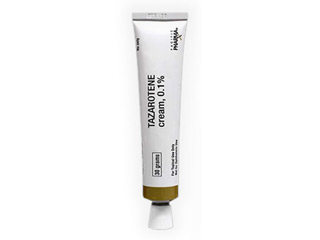
Tazorac (Tazarotene) — Patient Information (Australia)
Tazorac is a topical medicine containing tazarotene, a retinoid used to treat certain skin conditions. This page provides patient-friendly information about how it works, how to use it safely, what to expect, and important interactions and precautions.
Note: Product availability, strength options, and brand names may vary between pharmacies in Australia. Always refer to the specific product packaging and your healthcare professional’s advice.
Quick facts
| Category | Details |
|---|---|
| Active ingredient | Tazarotene |
| Medicine type | Topical retinoid (vitamin A–related) |
| Typical forms | Cream and/or gel (varies by product strength and local supply) |
| Common uses | Acne vulgaris; plaque psoriasis (where indicated); and other conditions depending on strength and formulation |
| How it’s used | Usually applied once daily, commonly in the evening |
| Main benefits | Reduces abnormal skin cell turnover, helps prevent clogged pores, improves texture and inflammation |
| Main downsides | Dryness, redness, burning/irritation; sun sensitivity |
What is Tazorac?
Tazorac (tazarotene) is a topical retinoid medicine. It is designed to help treat skin conditions by changing how skin cells grow and mature and by reducing inflammatory processes associated with conditions like acne and psoriasis.
In Australia, tazarotene products are used under local availability and regulatory arrangements. Your pharmacist can help confirm what strengths and formulations are currently stocked.
How Tazorac works (mechanism of action)
Tazarotene is a prodrug that converts in the body (including in skin) to an active metabolite. It works by binding to retinoid receptors in the skin. This leads to:
- Normalising skin cell turnover: It helps reduce the abnormal rate at which skin cells grow and shed.
- Reducing inflammation: Retinoid signalling can lower inflammatory activity in affected areas.
- Improving acne and pore formation: It can help prevent comedones (clogged pores) and support smoother skin texture.
- Psoriasis plaque improvement: In plaque psoriasis, it helps reduce thickened, scaly patches over time.
Pharmacokinetics (how the body handles it)
Because Tazorac is applied to the skin, only a portion of the medicine is absorbed into the bloodstream. Clinical behaviour can vary by factors such as:
- skin thickness and condition (e.g., inflamed vs intact skin)
- how much is applied
- how often it is used
- use on larger areas or broken/irritated skin
- occlusion (covered by tight dressing or plastic wrap)
In general, systemic exposure is low for typical topical use. Once absorbed, tazarotene is metabolised and then eliminated mainly through urine and faeces.
If you have concerns about absorption—especially if using on large areas or on compromised skin—speak with your pharmacist or prescriber for guidance.
Typical uses (indications)
Tazorac is used for conditions where a topical retinoid may be beneficial. Depending on the specific formulation/strength and local product labelling, it may be indicated for:
- Acne vulgaris (commonly for inflammatory and non-inflammatory lesions)
- Plaque psoriasis (for thickened, scaly plaques in appropriate patients)
- Other dermatology uses may exist depending on product strength and clinical criteria
Your pharmacist can clarify whether the product you are purchasing matches the condition you’re treating and explain any age or site restrictions stated on the packaging.
When to apply it (timing and routine)
Most people use Tazorac at a time when their skin is least exposed to irritants and when they can keep the area protected with sunscreen the next day.
- Common timing: Once daily in the evening.
- Start slowly: Many people begin every other night for the first 1–2 weeks to reduce irritation.
- Maintain consistency: Effects are gradual; use regularly as directed.
For best results, apply after washing and drying the skin. Allow the skin to be fully dry before applying to help reduce burning and peeling.
How food affects it
Because Tazorac is applied to the skin, food interactions are generally not expected. The medicine acts locally in the skin.
There are no specific dietary restrictions typically required for tazarotene topical therapy. However, general skin-health practices—like staying hydrated and avoiding known irritants—can still help comfort and reduce dryness.
Alcohol and medicine interactions
Alcohol
Alcohol is not known to directly interact with topical tazarotene in the way that oral medicines can. Still, alcohol can indirectly worsen skin irritation or dryness and may affect sensitive skin.
- If alcohol makes your skin feel drier or more irritated, consider reducing alcohol-containing skincare products and monitor how your skin reacts.
- To avoid irritation, be cautious with products containing ethanol/denatured alcohol on the same area as Tazorac.
Other medicines and skincare interactions
Some skincare and medicines used on the same area may increase irritation when combined with a retinoid:
- Other exfoliants/“anti-acne” actives: products containing benzoyl peroxide, salicylic acid, glycolic acid, or alpha hydroxy acids may increase dryness (not necessarily dangerous, but irritation is more likely).
- Topical keratolytics: can intensify peeling and burning.
- Other retinoids: avoid double-retinoid therapy unless specifically advised.
- Skin cleansers that are harsh: high-fragrance or strong scrubbing can worsen irritation.
If you use other dermatology products, your pharmacist can help you build a schedule (for example, using other actives on different nights).
Safety profile and common side effects
Like all medicines, Tazorac can cause side effects. Many are related to the medicine’s effect on the skin barrier.
Common (often manageable) side effects
- Dryness or peeling
- Redness
- Burning or stinging, especially when starting
- Itching
- Skin irritation or sensitivity
Less common
- Worsening of dryness severe enough to require temporary treatment breaks
- Contact dermatitis (an allergic or irritant reaction)
When to stop and seek urgent advice
Contact a healthcare professional urgently if you develop signs of a serious reaction such as:
- swelling of the face, lips, or eyelids
- severe blistering or weeping rash
- difficulty breathing
- severe burning that does not settle after stopping and providing skin care
Precautions and practical safety tips
- Avoid eyes, mouth, and skin folds: apply only to the affected area. Wash hands after application.
- Keep away from broken or sunburnt skin: application on damaged skin increases irritation.
- Sun sensitivity: retinoids can increase sensitivity to sunlight. Use broad-spectrum sunscreen (SPF 30+) daily and consider protective clothing.
- Moisturise: using a gentle moisturiser can reduce dryness and help you tolerate treatment.
- Don’t over-apply: a pea-sized amount is usually sufficient for small areas; more does not work faster and often increases irritation.
- “Sandwich” method (often helpful): moisturiser–Tazorac–moisturiser (thin layers) can improve comfort during the initial weeks.
Dosing and duration of use
Dosing depends on the condition being treated and the specific product strength. Always follow the instructions on your carton/label or as advised by your healthcare professional.
Typical dosing pattern
- Frequency: often once daily.
- How much: apply a thin layer to cover affected areas.
- Start-up strategy: many people begin with every other night for 1–2 weeks, then increase to daily if tolerated.
How long it takes to work
Results are gradual. Many people notice changes in:
- Acne: early improvement may be seen after several weeks; fuller benefit can take 8–12 weeks or longer.
- Psoriasis plaques: improvement is often progressive; consistent use is usually needed over weeks.
If you stop early because of irritation, benefits may not fully develop. Instead, manage side effects (for example, moisturise and reduce frequency) and speak with your healthcare professional if needed.
Practical use tips (step-by-step)
- Cleanse: use a gentle cleanser and pat the skin dry.
- Wait until dry: allow skin to be fully dry to reduce stinging.
- Apply carefully: apply a thin layer to affected areas only.
- Wash hands: unless the treated area is your hands.
- Moisturise: consider applying moisturiser after (or before and after) to reduce dryness.
- Sunscreen in the morning: daily SPF helps prevent irritation and uneven pigmentation.
- Track tolerance: if burning is significant, reduce frequency (e.g., every third night) and increase slowly.
If you accidentally get Tazorac near the eyes or on sensitive areas, rinse with water thoroughly.
Food-related and topical product compatibility
No special dietary plan is usually required. However, the way you combine Tazorac with other skincare products can influence irritation.
Generally preferred with Tazorac
- Gentle, fragrance-free moisturisers
- Non-comedogenic sunscreen
- Basic cleansing without scrubbing
Use caution with
- Strong cleansers or exfoliating toners
- Alcohol-based aftershaves or perfumed products
- Multiple active treatments at the same time (start one at a time)
Alcohol and skin irritation: real-world considerations
While there isn’t a direct medication interaction, alcohol can affect skin comfort. Many toners and skincare products contain alcohol; these can increase dryness and make retinoids feel more harsh.
If your skin is inflamed or peeling, you may do better choosing alcohol-free, fragrance-free alternatives until your skin barrier improves.
Alternative options (if Tazorac isn’t suitable)
Depending on the condition and your skin sensitivity, clinicians may suggest alternative treatments, such as:
- Other topical retinoids (different strengths or formulations)
- Benzoyl peroxide products for acne (may help inflammatory acne)
- Salicylic acid or other exfoliating agents for clogged pores (use cautiously to reduce irritation)
- Topical corticosteroids for certain inflammatory flare-ups (not for routine long-term retinoid support)
- Emollients and moisturising regimens to protect the skin barrier
- In more severe cases: clinician-directed oral or procedural therapies
Your pharmacist can discuss which alternatives are most appropriate for your specific concern and how to minimise irritation.
Market and legal context in Australia
Medicines in Australia are regulated under the Therapeutic Goods Administration (TGA) framework, and product availability can vary according to registration status, scheduled medicines rules, and current pharmacy supply.
Topical retinoids like tazarotene may have specific requirements regarding who can supply them and how they are dispensed, depending on the product form and strength.
For the latest status (including whether a product is available over the counter in certain strengths or requires professional involvement), check with your local pharmacy or the TGA’s public information.
Because guidance and regulatory pathways can change, it’s important to rely on current product labelling and pharmacy advice.
Recent guidance and evolving practice (general points)
In recent years, dermatology practice has emphasised:
- Skin-barrier support alongside retinoid therapy (gentle moisturisers and reduced irritation strategies).
- Step-up regimens (starting every other night and increasing slowly) to improve adherence.
- Sun protection as a standard companion strategy.
- Minimising irritant combinations at the start (for example, delaying additional exfoliants until tolerated).
Your pharmacist can recommend a starting plan tailored to your skin type and tolerance.
Delivery and availability in Australia
Online pharmacies commonly deliver within Australia using standard or express postage. Availability can vary depending on stock levels and the particular strength/formulation (cream vs gel).
- Dispatch times: may vary by supplier and local stock.
- Packaging: medicines are usually supplied in original labelled packaging.
- Cold-chain: most topical retinoid products do not require refrigeration, but follow storage instructions on your label.
If you need the product urgently or are substituting between formulations, ask your pharmacist to confirm compatibility and strength equivalence.
Storage instructions
- Store at room temperature as directed on the label.
- Keep the tube tightly closed.
- Protect from heat and direct sunlight.
- Keep out of reach of children.
Frequently asked questions (FAQ)
1) How often should I use Tazorac?
Many people use Tazorac once daily, often in the evening. Because irritation is common when starting, you may be advised to begin every other night and then increase frequency if your skin tolerates it.
2) What amount should I apply?
Apply a thin layer to cover the affected area. For small areas, a pea-sized amount is often enough. Avoid applying more than necessary, as extra product usually increases irritation without improving results.
3) Can I use moisturiser with Tazorac?
Yes. Moisturising is a key part of tolerating retinoids. You can apply moisturiser before and/or after Tazorac. The “sandwich method” can be especially helpful at the start.
4) Is it normal to get worse at first?
Some irritation and an initial change in breakouts or redness can occur during the first weeks. This does not always mean the treatment isn’t working. However, if burning is severe, stop and seek advice—sometimes you simply need a slower step-up or a pause.
5) Will Tazorac make my skin more sensitive to the sun?
Yes. Retinoids can increase sensitivity. Use a broad-spectrum sunscreen (SPF 30+) daily and avoid intense sun exposure where possible.
6) Can I shave or use hair removal products while using Tazorac?
Shaving can cause irritation, especially on retinoid-treated skin. If you shave, use gentle technique, avoid shaving directly over freshly treated areas, and consider timing Tazorac at night. Stop and consult a healthcare professional if you develop persistent irritation.
7) Can I combine Tazorac with other acne or psoriasis products?
Sometimes yes, but combinations can increase irritation. Many people do best by introducing other actives gradually or on different nights. If you’re using benzoyl peroxide, salicylic acid, or exfoliating products, ask your pharmacist for a schedule to minimise skin reactions.
8) What should I do if I feel burning or severe dryness?
Stop applying temporarily, switch to gentle moisturiser, and avoid other irritants. When comfortable, restart at a lower frequency (e.g., every other night). If symptoms are severe or worsening, seek professional advice.
9) How long until I see results?
Improvement is usually gradual. Acne often takes several weeks for early changes and up to 8–12 weeks for fuller effect. Plaque psoriasis may take weeks with consistent use. Patience and adherence are important.
10) Is there any food interaction?
No specific food interactions are expected with a topical retinoid like tazarotene because it acts mainly on the skin.
11) Does alcohol affect Tazorac?
Alcohol isn’t expected to directly interact with topical tazarotene, but alcohol-containing skincare can increase dryness and irritation. If you notice worsening dryness, choose alcohol-free, gentle products.
12) Can I use Tazorac around my mouth or on sensitive skin?
Use caution near corners of the mouth, nose folds, and eyelids. These areas are more prone to irritation. Apply only to the recommended areas and avoid contact with eyes and lips.
Summary
Tazorac (tazarotene) is a topical retinoid used for conditions such as acne vulgaris and plaque psoriasis. It works by influencing retinoid receptors in the skin, helping normalise abnormal skin cell turnover and reduce inflammation. Because irritation is common—especially during the first weeks—starting slowly, moisturising well, applying to clean, fully dry skin, and protecting against sun exposure are key to successful use.
If you are unsure about how to introduce Tazorac into your routine, which strength/formulation to choose, or how to combine it with other skincare actives, consult your pharmacist for personalised advice.